






Tense Markers

Samoan Tense Markers

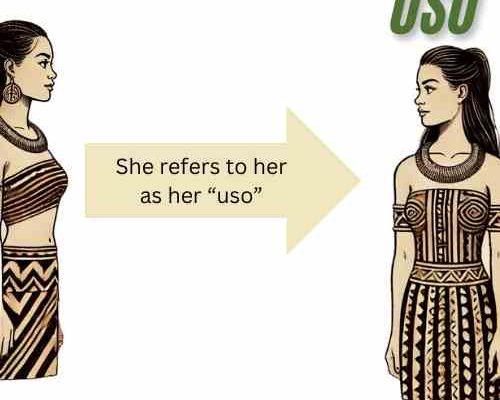
In the Samoan language, tense markers play a crucial role in expressing when an action occurs—whether in the past, present, or future. These markers are concise words that indicate the time frame of a sentence, providing clarity without the need for extensive conjugation. Learning these tense markers is essential for constructing grammatically correct sentences and…

Read More
Man Is A Teacher

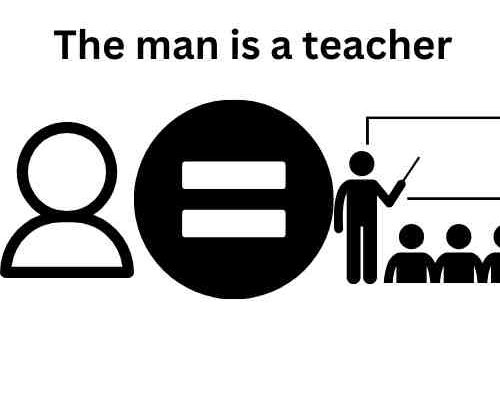
Equating Noun Phrases

Understanding Samoan Subject Phrases and the “O” Noun Tense Marker In the Samoan language, subject phrases often express identification, classification, or equivalency. These phrases are frequently connected using the “O” noun tense marker, which serves as a critical tool for defining relationships between subjects and predicates. For example, in the phrase “O a’u o se…

Read More
Tense Subject Action Samoan

Tense Action Subject Location

Understanding the Tense-Subject-Action Format in Samoan When learning Samoan, sentence structures can seem complex at first, but breaking them down makes them much easier to understand. One key format is Tense-Subject-Action (TSA), which is commonly used when the subject performing the action is a pronoun. In this format, the pronoun comes before the action, making…

Read More
Casual Convo in Samoan

Common Terms and Their Sentence Structure

Tense-Action-Subject (TAS) These sentences begin with a tense marker, followed by the action, and end with the subject. Tense-Subject-Action (TSA with Pronouns Only) These sentences begin with a tense marker, followed by a pronoun, and then the action. Colloquial (Assumed Command or Informal) These phrases are direct, casual, or imply a command. Pronoun/Te-Action-Subject These sentences…

Read More
Subject Doer Samoan

Multiple Subjects, One Action

Understanding Multiple Subjects in Samoan Sentences When you’re learning Samoan, you might notice that some sentences have more than one subject. This can feel confusing at first, but don’t worry—it’s easier than it seems! In these cases, the “doer” of the action (the person or thing doing something) is marked with a little word: “e”….

Read More
E Iai Samoa

To Have (E iai)

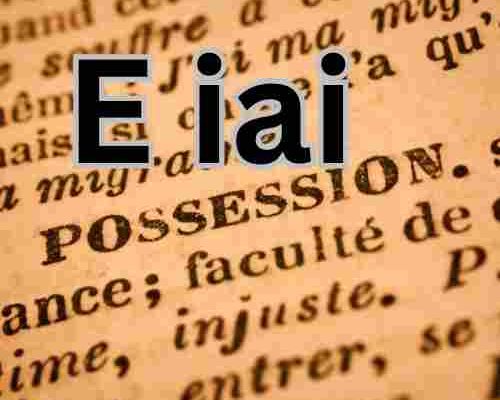
The phrase E iai in Samoan is a way to talk about having something or something existing. It is commonly used when asking if someone has something or when talking about what someone owns. Let’s break this down into simple steps. Basic Structure: Tense-Action-Possessive Pronoun-Subject The simplest way to use E iai is to follow…

Read More
Moana 2

Translating Moana

Se’i e va’ai mai, i le tatou lalolagi / Take a look at our world Breaking It Down: Putting It All Together: Understanding the T-SALT Sentence Structure in Samoan: A Descriptive Approach Samoan, like many Polynesian languages, has a flexible yet organized structure for constructing sentences. Among these structures, the T-SALT format—Tense-Subject pronoun, Action, Location,…

Read More
Black And White Aesthetic Minimalist Modern Simple Typography Coconut Cosmetics Logo

Samoan Reflexive Pronouns

Samoan Language Lesson: Reflexive Pronouns In Samoan, reflexive pronouns are used to indicate that the subject of the sentence is performing an action on themselves. These pronouns help clarify that the subject and the object of the action are the same person or group. Reflexive pronouns in English include words like “myself,” “yourself,” “ourselves,” etc….

Read More
Verified by MonsterInsights